






Cardiac Surgery Glossary

Staying at the Hospital for Cardiac Surgery
Learn about the care team that will support your family during your child’s hospital stay.
Bedside nurse: The nurse who will care for your child at the bedside (red RN badge)
Charge nurse: The nurse in charge of the unit (Cardiac Intensive Care Unit (CICU) or Heart and Kidney Unit (HKU)) on every shift
Cardiologist: The doctor who manages your child’s heart care
Cardiac intensivist: A cardiologist with special training to care for children in an Intensive Care Unit (ICU)
Cardiothoracic surgeon: The doctor who performs surgery on your child’s heart
Chaplain: A spiritual support person who can talk with you, pray with you or work with your own faith leader. They can also provide rituals such as blessings, communion, baptisms or other practices important to your family.
Child life specialist: A specialist who helps children and families cope with being in the hospital. They can:
- Help brothers and sisters prepare to meet their new sibling
- Suggest ways to comfort your baby, like recording your voice
- Help you check out books to read to your child
- Tell you about infant massage or other calming activities
Fellow: A doctor who has completed medical school and residency and is now getting extra training in a specialty.
Genetic counselor: A specialist who helps families understand how genetics can affect a child’s health. They can explain your child’s condition and talk with you about risks in future pregnancies.
Lactation consultant: An expert who helps breastfeeding parents. They can answer questions about breastfeeding, pumping, milk supply, and how to get a pump to use at home.

How the Heart Works
Aorta: Largest artery going from the heart to the body
Aortic valve (AV): The valve that controls blood flow from the left ventricle into the aorta
Artery: A blood vessel that carries blood from the heart to tissues and organs in the body
Atresia: Absence of a normal opening in the body
Atrium: One of two (2) upper “holding” chambers of the heart; normal hearts have two (2) atria (a right and a left)
Atrium, left (LA): The upper left-hand chamber of the heart where oxygen-rich blood (red) from the lungs enters the heart
Atrium, right (RA): The upper right-hand chamber of the heart where “used” blood without oxygen (blue) returns to the heart from the body
Cardiac Intensive Care Unit (CICU): A special care area for heart patients that need close monitoring
Coarctation: Narrowing of the aorta
Ductus arteriosus: Normal extra blood vessel found in a fetus before birth; connects pulmonary artery and aorta; it is normal for this extra blood vessel to go away after a baby is born
Foramen ovale: Normal hole between the two upper chambers of a baby’s heart; it is normal for this hole to close after a baby is born
Heterotaxy: A condition with many organs on the opposite side of the body
Hypoplastic: Underdeveloped or incomplete growth of a tissue or organ
Inferior vena cava (IVC): The blood vessel that returns “used” blood without oxygen (blue) from the lower part of the body to the heart
Intravenous (IV): In the vein; refers to a small needle or plastic catheter placed in the hand, foot, arm, or umbilicus (belly button) to give fluid and medicine
Mitral valve (MV): The valve that controls blood flow between the left atrium and left ventricle in the heart
Murmur: A blowing or rasping sound heard while listening to the heart; it may or may not mean a problem within the heart
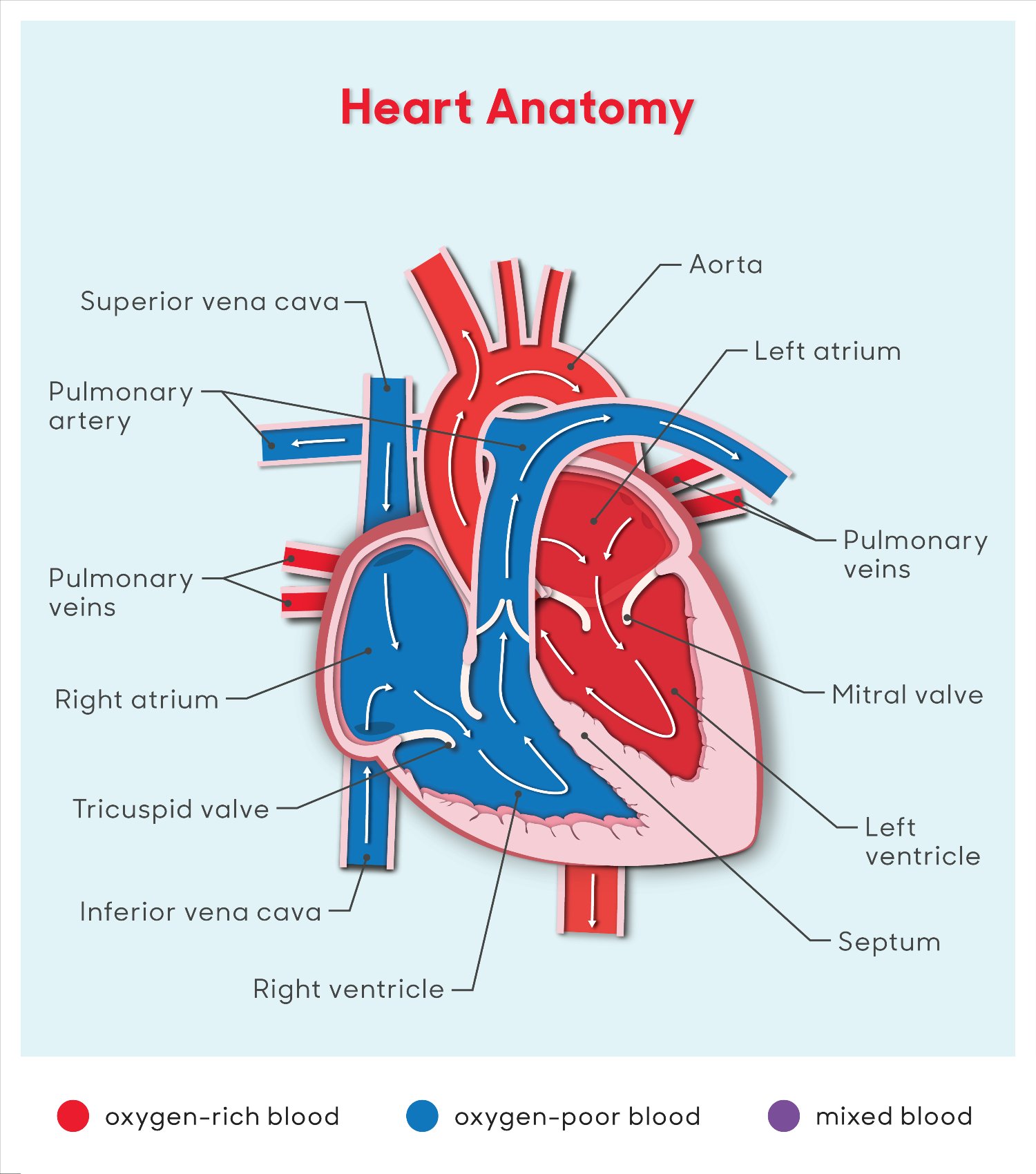
Heart Anatomy Illustration

Access the Patient Portal
Current patients have access to our patient portal, MyChildrensPortal, allowing you to conveniently prepare for your visit by sending messages, requesting appointments, refilling prescriptions or completing school forms and referrals. You can also check lab results and stay up-to-date on preventive care such as flu shots. The portal can be accessed anytime through your smartphone, tablet or computer.

Heart Conditions and Treatments
Learn more about heart conditions we treat at Children's National Hospital.